| Period | Victorian-Industrial (Retro-Futurism) |
| Description | A retro-futuristic aesthetic inspired by 19th-century industrial steam-powered machinery and Victorian elegance. |
| Categories | Aesthetics_Wiki_Articles, Genre_Fiction, 2000s, 2010s, Punk_Suffix, Fashion |
Steampunk
What is it?
Steampunk is a lush retrofuturistic subculture and subgenre of science fiction that imagines an alternate world where steam power remained the dominant technology. It is primarily set in an anachronistic Victorian era or a fantastical version of the 19th-century Industrial Revolution, where advanced technology is built with mechanical complexity rather than digital slickness.
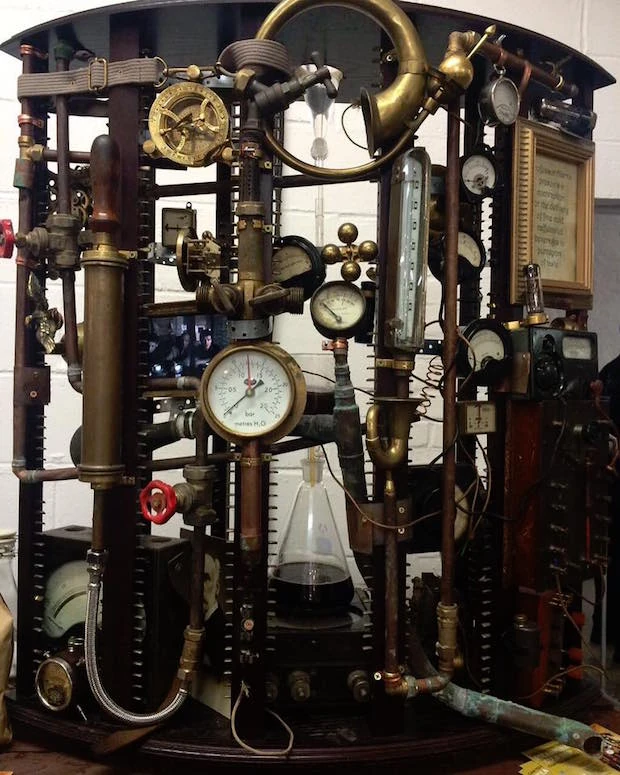
Visually, Steampunk is a celebration of craftsmanship and intricate mechanical design. It combines the ornate elegance of Victorian fashion with visible, raw engineering: exposed gears, brass fittings, and whistling boilers. It poses the grand question: what would the modern world look like if we never left the Age of Steam?
History & Origins
Scientific Romance Precursors
While the visual aesthetic emerged centuries later, the conceptual roots of Steampunk lie in the "scientific romance" of 19th-century authors Jules Verne and H.G. Wells. Their stories of submarine voyages and time travel provided the foundational seeds for imagining advanced technology within a historical framework.
The Literary & Aesthetic Birth (1980s)
The term "Steampunk" was officially coined in 1987 by author K.W. Jeter in a letter to Locus magazine. He intended it as a humorous reference to "Cyberpunk," describing a growing wave of speculative fiction set in the Victorian era. The aesthetic was further popularized throughout the 2000s, evolving from a literary genre into a comprehensive subculture involving bespoke crafting, music, and elaborate cosplay.
The look: a field guide
Brass & Clockwork Gears
The definitive motif. An abundance of polished brass, copper fittings, and intricately layered gears, cogs, and springs that are left exposed and fully functional.
Victorian Elegance
A wardrobe rooted in 19th-century high society: waistcoats, top hats, corsets, crinolines, and tailored trousers, typically rendered in shades of sepia, bronze, and leather.
Retro-Futuristic Gadgetry
Advanced technology reimagined with Victorian materials. Brass-framed goggles, steam-powered mechanical limbs, rayguns with glass tubes, and ornate airships with wooden hulls.
Mechanical Dials & Pipes
A reliance on analog interfaces. Interfaces are covered in pressure gauges, glass tubes, copper piping, and hand-cranked mechanisms that feel heavy and tactile.
Quick-reference checklist
- Are there visible, functioning gears, cogs, or clockwork elements?
- Does the technology consist primarily of brass, copper, and steam boilers?
- Is the clothing based on 19th-century Victorian or Industrial Revolution fashions?
- Are there aviator goggles, top hats, or mechanical gadgets with analog dials?
- Is the overall color palette dominated by sepia, bronze, and copper tones?
Gallery
Click any image to enlarge. Images load on demand.