| Etymology | Latin: limen (threshold) |
| Period | 2019 – present (internet naming) |
| Earlier instances | The Shining (1980), The Langoliers (1990) |
| Key moment | The Backrooms image (4chan, 2019) |
| Key palette | Fluorescent lighting, linoleum, aqua tile, beige carpet |
| Key spaces | Empty malls, pools, school corridors, hotel lobbies |
| Related | Dreamcore, Weirdcore, Hauntology, After Hours |
Liminal Space
What is it?
You’re in a swimming pool area. The water is perfectly still. The lighting is fluorescent and doing its best. The tiles are the exact shade of aqua that only existed in public pools built before 1997. Nobody else is here. There is no reason, exactly, why nobody else is here , it’s not late, it’s not a holiday, the pool is clearly operational , but nobody else is here, and the absence has a quality to it. The word for the quality is “liminal.”
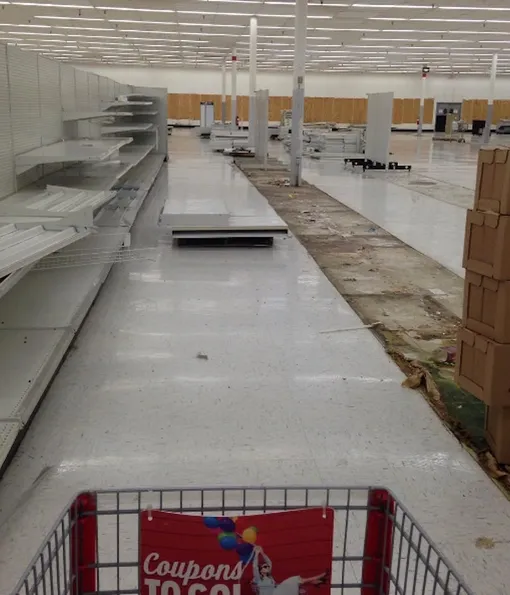
You have stood in spaces like this before. A school corridor in early August. A shopping mall at 7am when the shops aren’t open yet. A hotel lobby at 3am. An airport terminal for a flight that doesn’t board for six hours. These spaces are not abandoned. They are simply between states , designed to be passing-through places that you are currently, unexpectedly, inhabiting.
That is the Liminal Space aesthetic. It is the art of the in-between.
The etymology (which is actually helpful here)
“Liminal” comes from the Latin limen, meaning threshold. In its academic anthropological sense, a liminal period is a transitional state , the space between what you were and what you’re about to become. Arnold van Gennep used it to describe rites of passage. Victor Turner expanded the concept. At some point, the internet decided that empty malls qualified.
History
The Shining had it first
The film that most directly presages liminal space aesthetics isn’t a 2019 internet post , it’s Stanley Kubrick’s The Shining (1980), which turned a sprawling, empty hotel into one of cinema’s most effective spaces of dread. The Overlook Hotel is liminal: it’s a place people pass through (a seasonal resort), rendered permanent and inescapable. The empty corridors, the wrong-light carpet, the rooms that contain too much , these images were conditioning a generation for what the internet would later name.
Stephen King’s The Langoliers (1990, adapted 1995) contributes a mysteriously deserted airport, which is practically a liminal space archetype in full.
The Backrooms (2019)
The pivot point for liminal space as an internet culture is a single image posted to 4chan in 2019: a photograph of a yellow-carpeted room with fluorescent overhead lighting, slightly irregular geometry, and no people. The caption described it as what you see when you “no-clip out of reality” , a glitch, a fall-through, a place behind the seams of the world you’re supposed to be in.
This image and the mythos that grew around it became The Backrooms: an entire constructed mythology of “levels” , spaces beyond normal reality, each with its own atmosphere and rules , that expanded into YouTube videos, fan wikis, and eventually a feature film deal with A24. The Backrooms is Liminal Space mythology with a narrative attached, and it introduced the aesthetic to an enormous audience.
The feeling (and why it’s personal)
Liminal Space is unusual among internet aesthetics because it’s fundamentally subjective in a way that most aren’t. A photo of an empty shopping mall is or isn’t liminal depending almost entirely on who’s looking at it and what their personal archive of places-I’ve-been-before contains.
For people who grew up elsewhere, or elsewhen, the same images may land differently. A Turkmenistani shopping mall at night is liminal to someone. An empty 1990s American elementary school corridor is liminal to someone else. The feeling is universal; the specific triggers are personal.
Kenopsia and Anemoia
To fully understand the liminal experience, two terms from the Dictionary of Obscure Sorrows are often cited by the community:
- Kenopsia: The eerie, forlorn atmosphere of a place that is usually bustling with people but is now abandoned and quiet. It is the “ghostly” feeling of a school hallway at night or an empty stadium.
- Anemoia: Nostalgia for a time you’ve never known. This explains why many 2000s-born youth feel a deep, aching connection to photos of 1980s food courts or 1990s airport lounges.
The evolution
The aesthetic started as photography , real photos of genuinely empty transitional spaces. It expanded to include:
Edited and constructed imagery
Digitally altered spaces, CGI environments built to look like real liminal spaces, Roblox maps that capture the atmosphere, video game levels that have the quality. Early Call of Duty maps. Garry’s Mod empty servers.
Narrative: The Backrooms
Found footage-style videos, the liminal space as horror setting, RPG-horror games, and analog horror series. The yellow carpet room as ground zero for an entire mythology.
Dreamcore overlap
As the aesthetic developed, it connected with Dreamcore, Weirdcore, Hauntology, and Traumacore , all aesthetics that engage with the feeling of familiar-but-wrong. The liminal space became a shared location for a cluster of aesthetics processing nostalgia through a distorted lens.
After Hours distinction
After Hours aesthetics involve empty spaces too , but lean peaceful and tranquil, almost inviting. Liminal Space leans toward unease. The pool is still, but you wouldn’t get in.
The visual grammar
Liminal Space images work through a specific set of components: the absence of people (not abandoned , just empty); architecture and décor from roughly 1975–2010 (the older the better, for nostalgia purposes); lighting that is either fluorescent and institutional or oddly dim; a sense of scale that implies these spaces were built for crowds who are not here.
The spaces themselves , malls, schools, pools, corridors, parking structures, hotel lobbies , are all designed for human presence, and their emptiness is legible against that design intention. The more effective liminal space images feel like they were taken during a gap in time , a moment that shouldn’t exist, when a space that is supposed to be occupied is somehow, impossibly, not.
Poolcore and Mallsoft
Liminality has branched into specific sub-aesthetics that focus on certain types of architecture:
- Poolcore: Focuses on the uniquely surreal atmosphere of indoor tiled pools, communal showers, and water parks after hours. The combination of aqua tiles and echoing acoustics creates a sensory “threshold” feeling.
- Mallsoft: A musical and visual subgenre of Vaporwave that focuses on the atmosphere of empty or “dead” shopping malls. It often utilizes reverb-heavy elevator music to simulate the feeling of being alone in a vast, consumerist cavern.
Liminal Gaming
Video games have become a primary medium for experiencing liminality. Certain games are famous for their “unintentional” liminality, while others are designed to evoke it:
- Source Engine Games: Titles like Half-Life 2 and Garry’s Mod have a specific, sterile lighting and architectural style that feels deeply liminal when players find themselves alone on a server.
- The Stanley Parable: A game entirely set within an empty, surreal office building that perfectly captures the unease of an abandoned workplace.
- Superliminal: A puzzle game that uses forced perspective and dream-logic, set in a series of increasingly strange hotel and office corridors.
Quick-reference checklist: is it a liminal space?
- Space designed for human presence, but nobody’s there?
- Architecture or décor from roughly 1975–2010?
- Fluorescent lighting, or lighting that’s doing something slightly wrong?
- A sense that this space is usually full and currently, inexplicably, isn’t?
- Pool, mall, school corridor, hotel lobby, airport, or parking structure?
- Linoleum, ceiling tiles, aqua tile, or carpet from the early 1990s?
- The feeling that you’re seeing your own memory without anyone else in it?
- Overall vibe: “the light is on, the door is open, nobody’s home”?
Four or more? You’re in liminal space territory. The pool is still. You wouldn’t get in.
See also
- Cryptidcore , shares the interest in strange transitional spaces
- Mizuiro , also drawn to urban transitional environments
- Signalwave , shares the late-night, found-transmission quality
- Silicon Dreams , overlapping visual quality in certain CGI environments
- Weirdcore , adjacent, familiar-but-wrong aesthetic
- Dreamcore , directly adjacent dream-logic aesthetic
Gallery
Click any image to enlarge. Images load on demand.