| Period | 2010s–present |
| Description | An aesthetic that celebrates the beauty of aspects of nature that are typically seen as "ugly" or "dirty," such as frogs, mushrooms, and mud. |
| Categories | Needs_work, Sensitive_Content, Aesthetics_Wiki_Articles, Core_Suffix, Fashion, Brown |
Goblincore
What is it?
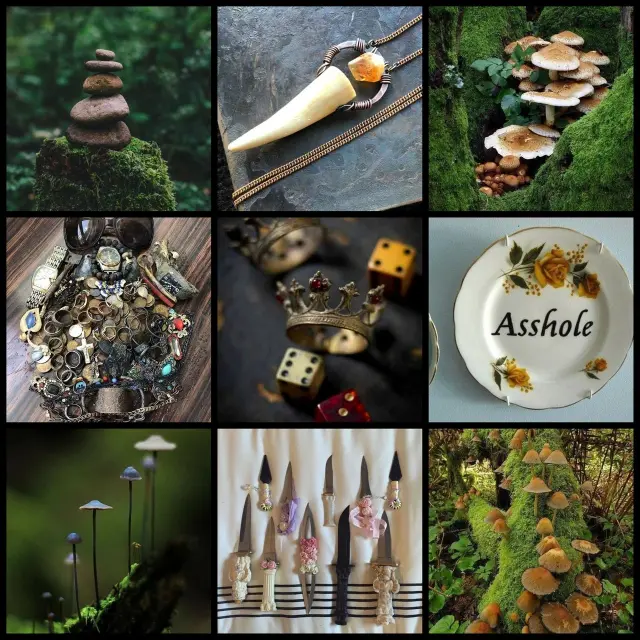
Goblincore is a celebration of the organic and the unintended. It is the aesthetic of "the forest floor"—the place where moss grows over rotten logs, frogs hide in the mud, and small, shiny objects are hoarded like treasure. It is a cousin of "Cottagecore" but with a much dirtier, more chaotic focus.
Visually, it is defined by a love for collecting. Adherents, often self-identifying as "Goblins," enjoy finding "trinkets" such as polished stones, snail shells, or vintage buttons. It promotes a non-judgmental appreciation for the messiness of the biological world.
History & Origins
The Tumblr "Shinies" Era (2015–2017)
Goblincore solidified on Tumblr among communities who felt the mainstream "clean" nature aesthetics were too restrictive. It drew inspiration from folklore and the idea of the "helpful goblin" who lives in the garden, eventually becoming a massive hub for people who loved foraging and biology.
Inclusive Escapism (2020–present)
The aesthetic saw a massive surge on TikTok during the 2020s. It became particularly popular as a form of non-binary and neurodivergent self-expression, offering a space where "being a bit messy" and having obsessive collections was not only accepted but celebrated as an art form.
The look: a field guide
The Hoard
Displays of "found objects": crystals, dried mushrooms, rusted keys, and various "shinies" kept in glass jars or boxes.
Earthy Overgrowth
A focus on deep damp browns, vibrant moss greens, and the muted colors of decaying leaves and tree bark.
Amphibian Icons
Visual obsession with frogs, toads, snails, and insects—creatures often overlooked by more traditional nature aesthetics.
Thrifted Layering
Clothing that looks lived-in: oversized sweaters, corduroy pants, and heavy boots, often featuring patches or slight distressing.
Quick-reference checklist
- Does the image feature frogs, mushrooms, or snail shells?
- Is the color palette dominated by "dirt" browns and "moss" greens?
- Do you see a collection of small, assorted trinkets or "shinies"?
- Does the environment look damp, overgrown, or cluttered in a cozy way?
- Is there a total lack of "corporate" or "clean" visual elements?
Gallery
Click any image to enlarge. Images load on demand.