| Period | Late 1990s–mid 2000s |
| Description | A fusion of gothic fashion with electronic dance music culture, featuring neon aesthetics, medical motifs, and industrial technology. |
| Categories | Good_Articles, Sensitive_Content, Aesthetics_Wiki_Articles, Subcultures, 1990s, 2000s |
Cybergoth
What is it?
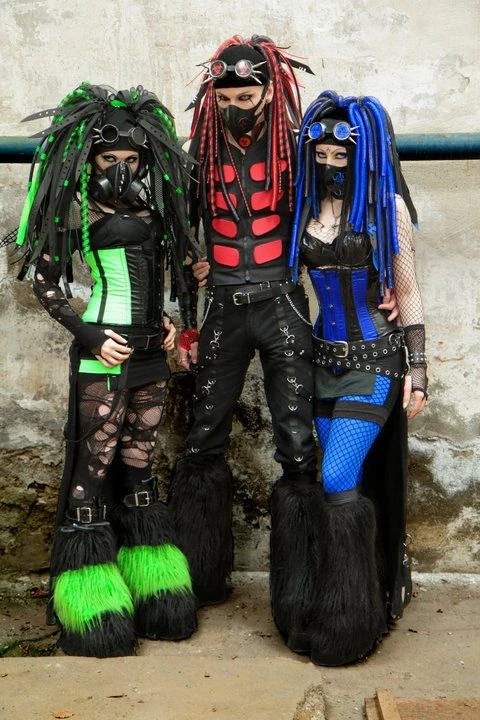
Cybergoth is the high-visibility, industrial mutation of the gothic subculture. If "Traditional Goth" is a candlelit Victorian mansion, Cybergoth is a strobe-lit underground rave in a futuristic factory. It is defined by its "toxic" color palette and its obsession with biomechanics.
Visually, it is the home of the "Cyber-fall"—massive dreadlock-like hair extensions made of synthetic materials or plastic "tubing." It relies on a combination of jet-black clothing and piercing neon accents (usually "Radioactive Green" or "UV Pink"), paired with gas masks and electronic goggles.
History & Origins
The Industrial Dance Floor (1998)
Cybergoth emerged in German and British clubs where "EBM" (Electronic Body Music) and Industrial Techno were the primary soundtracks. It was a visual response to the fast, aggressive beats, requiring fashion that was durable, reflective, and futuristic.
The "Cyber-Rave" Peak (2002–2006)
The aesthetic globalized as music videos for bands like Combichrist and various "hardstyle" producers spread online. This era defined the iconic dancing style (Industrial Dance) practiced in urban ruins or strobe-lit rooms, which remains a staple of the aesthetic's digital presence today.
The look: a field guide
Cyber-Falls & Dreadlocks
Intricate, neon-colored hair extensions made from PVC, lace, or "Rexlace" plastic tubing.
Rave Gear & Goggles
Wearing electronic/welding goggles on the forehead and gas masks (often decorated with neon paint) around the neck.
Reflective Materials
Wearing platform boots (Demonia), fishnet sleeves, and clothing made from vinyl, latex, or UV-reactive fabrics.
Biohazard Motifs
Consistent use of symbols like the biohazard sign, radiation warnings, and electronic circuit patterns.
Quick-reference checklist
- Is there a harsh contrast between jet-black and neon "acid" colors?
- Do you see plastic hair extensions (Cyber-falls) or gas masks?
- Is the setting an industrial club, a factory, or a strobe-lit room?
- Are there references to biohazards, circuits, or radioactive materials?
- Does it look like a still from an early 2000s Industrial music video?
Gallery
Click any image to enlarge. Images load on demand.